Meet Maeve…Confusion to Clarity
From invisible to unstoppable. Your midlife reclamation starts here.
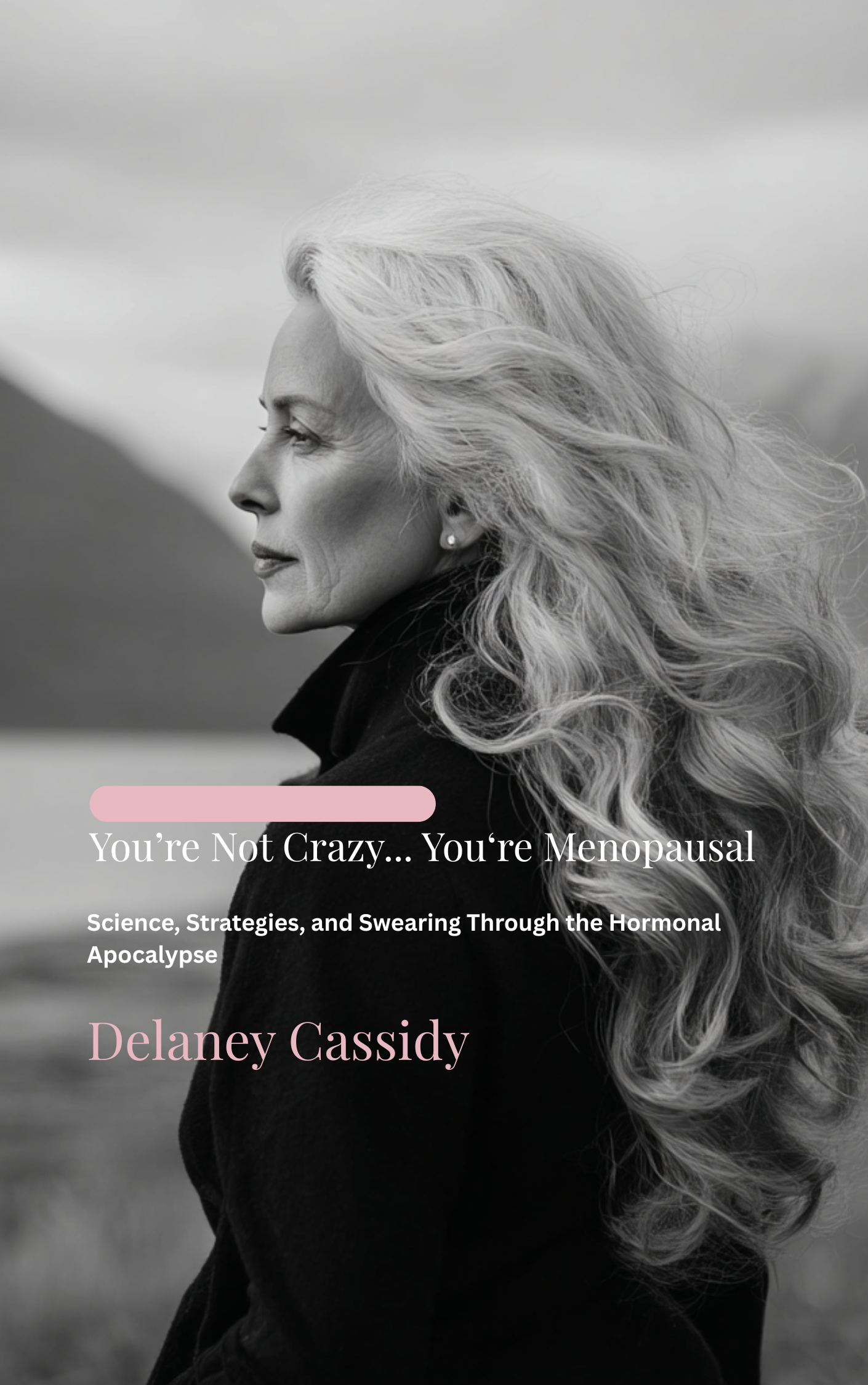
Are you navigating perimenopause or menopause and wondering what is happening to your body?
You’re not crazy… you’re menopausal.
In this bold, evidence-informed guide, healthcare executive and advocate Delaney Cassidy brings clarity to the biological, cultural, and institutional confusion surrounding midlife hormonal change.
Inside, you’ll learn:
• Why metabolism shifts during perimenopause and menopause
• Why insomnia and sleep disruption increase
• How hormonal fluctuations impact mood, anxiety, and cognition
• What the latest evidence says about hormone replacement therapy (HRT)
• Why research funding disparities have left women underprepared
• A structured framework for reclaiming midlife power
For decades, women have navigated menopause with inconsistent education, outdated medical narratives, and cultural minimization.
This book restores biological literacy and equips you to advocate clearly in clinical and institutional settings.
If you are seeking clarity on perimenopause symptoms, menopause weight gain, sleep issues, anxiety, hormone therapy, and midlife transition — this book was written for you.
Midlife is not decline.
It is recalibration.
What you will learn:
🔥 Why you're not crazy — the science behind every symptom you've been dismissing, doubting, or apologizing for
📊 The truth about the funding gap — how decades of underfunded research left 1.2 billion women without answers, and why your doctor probably never connected the dots
🧠 What's actually happening in your body — a plain-English breakdown of hormones, brain chemistry, and the full-system impact of menopause nobody warned you about
💪 Science-backed strategies that actually work — rapid relief for hot flashes, brain fog, sleep disruption, mood swings, weight gain, and low libido — starting today
❤️ How to reclaim your identity, your power, and your purpose — because menopause is not an ending; it is the most powerful transition of your life
🗣️ How to advocate for yourself in a medical system that wasn't built for you — exactly what to say, what to ask, and when to walk out and find a better doctor
also included in this book
Printable Resources
Symptom Track
Food and Mood Journal
Sleep Ritual Check
One Week Sleep Log
Doctor Visit Prep Sheet
Hormone 101 Reference Page
Empowered Conversation Scripts
Affirmation or Grounding Phrases
Mini Mindset-Reset Prompts
Resource List (Websites, Directories, Communities)
“When to Call the Doctor” Quick Guide
DO YOU HAVE A STORY TO SHARE?
iNSPIRE OTHERS OR SAVE OTHERS FROM THE TREATMENT YOU RECEIVED.
lET’S HELP EACH OTHER!

Frequently Asked Questions
-
Not at all. This book is for women in perimenopause, menopause, and post-menopause — but also for women in their late 30s who want to understand what's coming. The earlier you have this information, the better equipped you'll be. It's also for the daughters, partners, and friends of women going through it who want to understand and support them.
-
Absolutely not. The science is in here — and it's accurate — but it's written in plain language with zero medical jargon. Think of it as the conversation your doctor never had time to have with you, explained by someone who has lived it and researched it deeply..
-
No — and it says so clearly from the start. This book is educational and empowering, not prescriptive. It is designed to help you walk into your doctor's office better informed, with better questions, and with the confidence to advocate for yourself. Always work with a licensed healthcare provider for your personal medical decisions.
-
Hot flashes get about two pages. This book covers the full picture: brain fog, anxiety, sleep disruption, weight gain, mood swings, low libido, joint pain, heart health, bone health, identity, empty nest, the cortisol crisis, natural solutions, HRT, and how to navigate the medical system — plus the cultural and historical context that explains why women have been left in the dark for so long.
-
Yes — Chapter 4 covers your full medical options including HRT, bioidentical hormones, and non-hormonal treatments. The book presents the evidence fairly so you can have an informed conversation with your provider — without fear or pressure in either direction.
-
Very likely yes. Perimenopause can begin as early as the late 30s — often years before periods become irregular. If you've noticed changes in sleep, mood, anxiety, energy, or cycle length, this book will help you connect the dots.
-
Available on Amazon in Kindle and paperback.